My mother is my most ardent fan. She often responds to these musings with effusive praise laced with superlatives. She also writes notes in her nearly perfect flowing cursive hand. Those notes, penned most often in blue ink, are special. They mean more because it costs her something to do it. She could have texted …
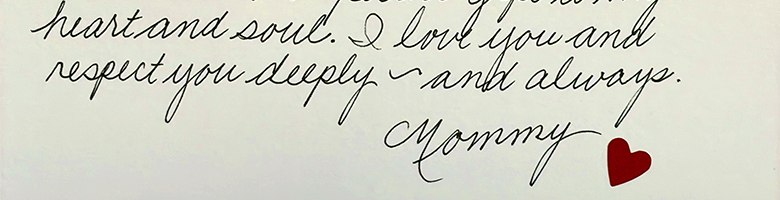
My mother is my most ardent fan. She often responds to these musings with effusive praise laced with superlatives. She also writes notes in her nearly perfect flowing cursive hand. Those notes, penned most often in blue ink, are special. They mean more because it costs her something to do it. She could have texted the same words. That would have been nice, but not special. Special is created through the intentional investment of personal time.
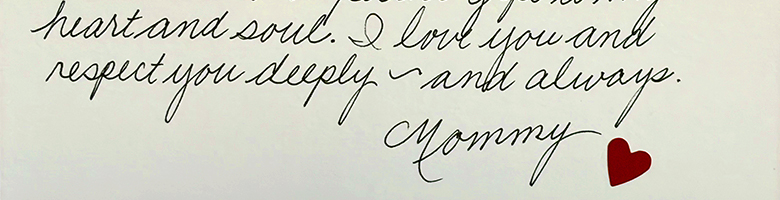
I’ll admit I may be a little old-fashioned, but I think some things deserve to be in actual, physical, pen-in-hand writing. Thank-you notes for gifts. Love letters. Notes of appreciation. Notes of condolence. Apologies (as a follow-up to an in-person conversation). Recognition of milestones and life events. Or anytime you simply want to overdeliver. In a digital age, putting a pen to paper proves you paused, reflected, and intentionally invested time.
If you want people to experience being valued and cared for, sending them handwritten notes has a high return on investment. It also changes you.
Handwriting fundamentally changes how your brain processes information. When you type, your brain operates in a kind of shortcut mode. The physical act of pressing keys is largely uniform, so the brain offloads encoding and focuses on output speed. When you write by hand, the motor cortex, the language centers, and the regions tied to memory formation all activate together. Each letter requires a distinct physical movement. That necessitates slower processing, and slower processing means deeper encoding. Research consistently shows that students who take notes by hand retain and understand material significantly better than students who type, even when the typists record more words.
More words, less retention.
The hand constrains you, and the constraint makes you think.
When you sit down to write a note to someone, that same mechanism works on your perception of them. You have to think about them. What did they do? Why does it matter? What do you actually want to say? The process of committing the words to paper encodes that person differently in your memory. You are not just acknowledging them. You are constructing a more complete picture of who they are and what they contribute. Writing about people changes the way you see them.
I write all my notes in meetings by hand. Every one. People have asked me why I bother when I could just type faster. But that misses the point entirely. Writing by hand forces me to listen differently. I cannot transcribe everything, so I have to decide what matters. That act of deciding is itself a form of understanding. I’m not just recording what people say; I’m processing it in real time. I walk out of those meetings remembering more, connecting the dots faster, and frankly caring more about what was said. My handwritten notes don’t just capture the meeting. They help me be present in it.
Whether you are writing a note to someone after a hard week or scribbling in the margins of your notepad while they speak, the act of writing by hand is a form of investment. It costs something. Attention. Time. Intention. And what you spend your attention on, you begin to value. What you value, you protect. What you protect, you honor.
People are worth the time it takes to interact with them personally. A handwritten note says that clearly, without saying it at all. It says: I stopped. I thought about you. I put ink on paper because you are worth the time it took. In a world optimized for speed and efficiency, that kind of slowness is a radical act of caring—the Bison Way.