
Carnival and Lent "For Caravaggio, there was only Carnival and Lent and nothing in between." Andrew Graham-Dixon wrote that line in his biography of Michelangelo Merisi da Caravaggio, the 16th-century painter whose genius was matched, perhaps exceeded, by his darkness. Caravaggio brawled. He killed a man. He spent the last four years of his life …
Carnival and Lent
“For Caravaggio, there was only Carnival and Lent and nothing in between.”
Andrew Graham-Dixon wrote that line in his biography of Michelangelo Merisi da Caravaggio, the 16th-century painter whose genius was matched, perhaps exceeded, by his darkness. Caravaggio brawled. He killed a man. He spent the last four years of his life as a fugitive. And yet he gave the world some of the most breathtaking paintings in human history—pioneering the revolutionary chiaroscuro technique, where light emerges from near-total darkness as if lit by a single stark candle. His figures had dirty feet and callused hands. He painted sacred subjects as if they lived down the street. He was, in a word, complicated.
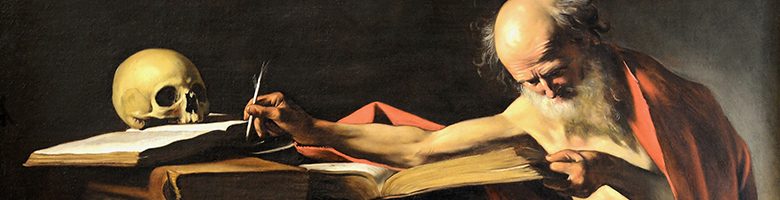
There is actually a concept for what Caravaggio had going on. Some call it the “price of genius”: the idea that truly exceptional people carry within them a temperament or even a pathology that cannot be separated from what makes them extraordinary. We are expected, as observers, to accept the whole package. The darkness and the light come together. You cannot have the Sistine ceiling without Michelangelo’s impossible arrogance. You cannot have Steve Jobs without the volcanic fits of cruelty. The chaos and the creation are inseparable. Take the difficult parts out, and you might just take the gift with it.
I have sat with this idea for a while, and I want to push back on it. At least for leaders.
Artists…maybe. Visionaries working in isolation…perhaps. But leaders? No. We do not get that deal. The very nature of leadership means our temperament is never just our own problem. Leaders exist in relationship with people who depend on them, who take their cues from them, and who are shaped by the environments we create. A volatile painter’s rage mostly destroys his own life. A volatile leader’s rage destroys someone else’s. The blast radius is much larger.
The task for leaders is more complicated than it was for Caravaggio. We cannot live at the extremes. We cannot swing between reckless indulgence and severe penance and call it depth. We have to find a way to live in the space between Carnival and Lent—not as a compromise, not as a watered-down version of both, but as something that actually requires more of us than either extreme does on its own.
The gifts that make a leader compelling—passion, intensity, the ability to see what others cannot see, the willingness to push into uncomfortable spaces—those are not separate from the harder edges of our personalities. They come from the same place. My drive comes from the same root system as my impatience. My ability to care deeply about people has a shadow side that can become controlling when I am afraid. My recovery has taught me that I cannot surgically remove the difficult parts without also damaging the good ones. The goal is not elimination; it is integration.
What recovery actually teaches—and what I believe is the true work of leadership—is that you can hold the full truth of who you are without being held captive by any one part of it. You can feel the pull toward the extreme without acting on it. You can tap into the intensity that makes you effective without burning down the people around you. You can be fully yourself—complicated, flawed, and gifted—and still choose, in this moment, to act in a way that serves someone else. That is not weakness. That is a harder thing than just being Caravaggio.
Caravaggio painted people as they actually were—weathered, raw, real. He brought the sacred down to earth in a way that felt honest. I think that is something leaders can learn from—not the extremes of his living, but the honesty of his seeing. We can bring ourselves to our leadership fully and honestly. We can acknowledge that we have a tendency toward extremes that give us access to certain gifts. We just cannot use that as an excuse to harm the people we are called to serve.
The light in Caravaggio’s paintings is more powerful because of the depth of the darkness surrounding it. He understood that you do not get one without the other. Leaders can understand this, too—not as permission to indulge the darkness, but as a reason to do the hard, internal work of integration. To carry both the Carnival and the Lent and to live honestly in the space between them—that is the Bison Way.