
My daughter is outfitting a van to go camping. Her vision is to visit all 48 contiguous states while experiencing “van life.” I love that about her. She is not afraid to go after what she wants. I am also her dad, so I worry about her running around the country in a van with …
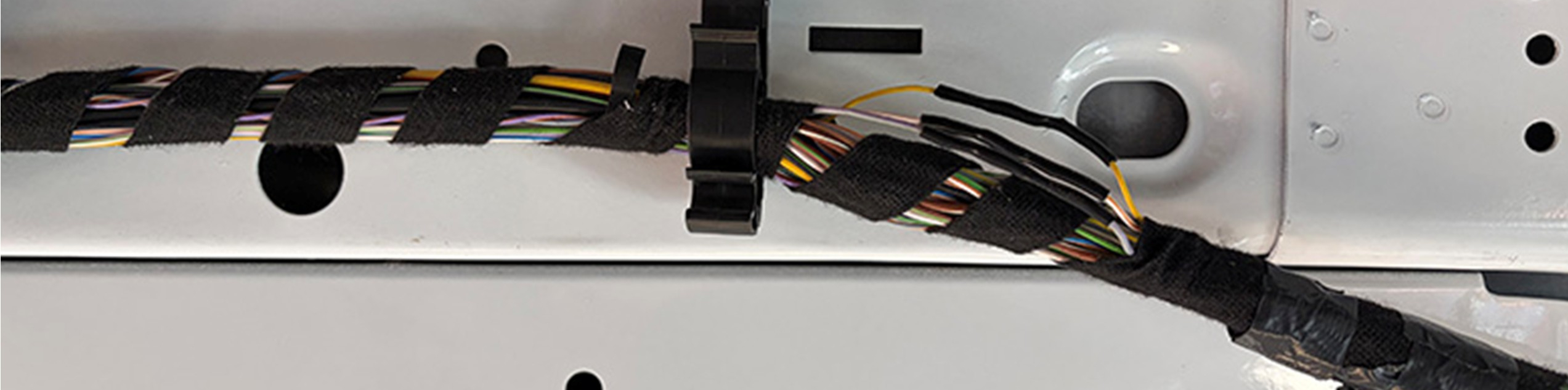
My daughter is outfitting a van to go camping. Her vision is to visit all 48 contiguous states while experiencing “van life.” I love that about her. She is not afraid to go after what she wants. I am also her dad, so I worry about her running around the country in a van with so many things that could go wrong.
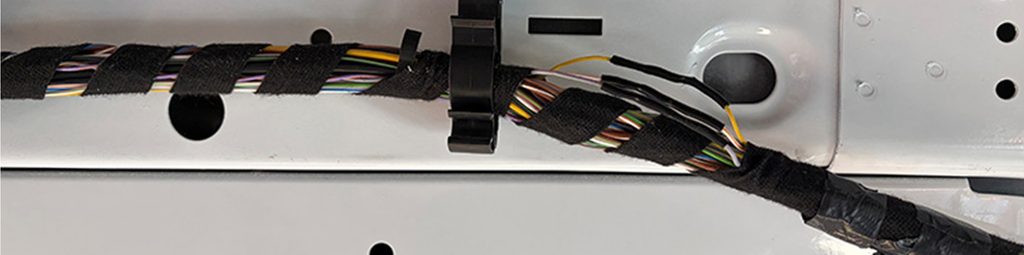
She brought the van to our house so the boys (her brothers) could help her work on it. The first order of business was a right taillight that didn’t work. It worked when she bought the van and quit at some point during the minor work she has done so far. By minor, I mean tearing out the minimalist interior, adding some side windows in the back, and buying a bunch of stuff because “the internet said that’s what I need.”
I asked if it was possible she had cut or damaged some wires during the work. “No” was the answer. So, the troubleshooting began with the assumption that the wiring was intact. They tested, disassembled, and retested the plug at the light. They checked and rechecked fuses. Interestingly, the ground was good and the backup light worked, but there were no running lights and no brake or turn signal.
Eventually, one of my sons decided to start at one end and trace the harness, which is hard to do because of the way it’s wrapped. Lo and behold, he found a cut in three wires out of a bundle of a couple dozen. We spliced those three wires, and the taillight works.
The trouble is that the answer was there from the beginning. The light worked; then work was done; then the light didn’t work. The most likely suspect was the change. The symptoms pointed the same way. When the plug checks out, the fuses check out, and three wires still go dead while their neighbors work fine, the problem is somewhere in between. All of that was in plain view, sitting behind a “No.”
I don’t blame her for the answer. She answered honestly from what she remembered. The person closest to a change is often the least able to see what it did. Richard Feynman put it this way: “The first principle is that you must not fool yourself, and you are the easiest person to fool.” The rest of us went along because the answer was confident and because testing the easy ends of the problem felt like progress.
This happens in our organizations all the time. Something that used to work stops working right after a reorganization, a new system, a new hire, or a new policy. We ask the people who made the change whether it could be the cause. They say no in good faith, and we spend weeks testing plugs and swapping fuses. Meanwhile, the cut is somewhere in the middle of the harness, wrapped up where nobody wants to look.
Troubleshooting requires the character quality of wisdom: practically applying knowledge gained over time. That definition supposes two things: time and application.
Time is the part you can’t shortcut. My daughter has plenty of knowledge. The internet made sure of that. What she doesn’t have yet are the years of experience that teach you a light that quit during the work was probably broken by the work. Nobody gets that kind of knowing without living through it.
Application is the part we sometimes skip, and it is the difference between experience and wisdom. I asked the right question at the start, and then I let it go when the answer came back: “No.” Knowing the likely cause and acting on it are two different things. Wisdom would have said, “Maybe so, but let’s trace the harness first anyway, because that’s what changed.”
A few things worth carrying into your own troubleshooting:
- When something stops working, start with what changed.
- Read the pattern of what works and what doesn’t. It usually tells you where to look.
- Treat a confident “No” as one more thing to verify, including your own.
- When testing the ends keeps coming up empty, trace the whole line.
As for my daughter, the van will teach her more than I can. Somewhere around state thirty, she’ll have her own collection of things that broke, and she’ll know where to look first. My job is to answer the phone when she calls. Wisdom is earned through time and application, and it grows faster when we share it with each other. That is the Bison Way.